The Finite Element Method...
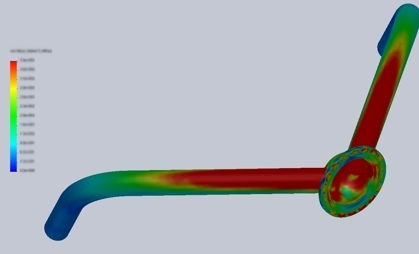
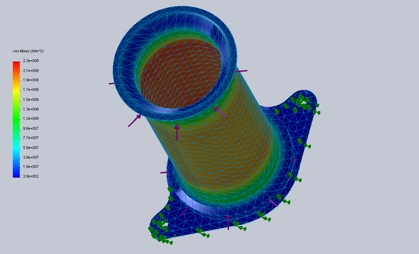
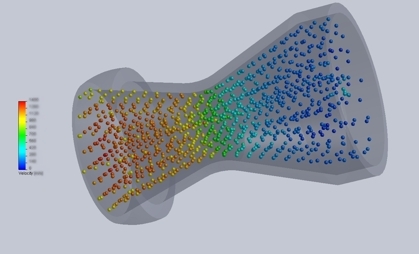
A Jetpack is one the most unstable flying devices, a lot of parameters have to be in place to enshure a successful flight. The main goal for this Project was not to invent the wheel again, but to improve technical details based on scientific research using the latest engineering knowledge and technology. Jetpack structural design includes fatigue analysis, stress analysis, fracture mechanics, aeroelasticity most based on finite element analysis.
The extensive experience of analysing both metallic and composite structures/materials was nessecary to build the Jetpack evo NT at its current level. The used modelling capabilities ranged from simple 2-D analyses to complete 3-D propulsion structures. Nearly each single of the 327 Parts, the Jetpack evo NT consists of, was computer aided designed and simulated using FEA, icludiung the weldments and leight weight composite bolts.
Evo NT: The concept for the Jetpack evo NT was thoroughly tested, evaluating a multitude of design variations and materials. Using the finite element analysis, the various factors of material and geometric design were analyzed and evaluated. The Jetpack evo NT had to have more lightweight and more durable structures. the improvements Top donors will get their name available. Contact me for more information!
During the development of the Jetpack evo NT, the formulation and application of appropriate mathematical and numerical models to predict the state of deformation and stress of three-dimensional parts and the whole jetpack structure, explaining and understanding the limitations of all of the used simulation models, asses their applicability to realistic configurations and estimate the errors, resulting from their applications, had to become routine.
Computer aided analysis of a structural design applies energy and variational principles for the determination of deflections and internal loads in structural elements. Further on, applying the Ritz Method for the approximate calculation of deflections and stresses in structural elements, explains the principles and implementation of the finite element method in linear static problems.
Using the finite element method in the stress analysis of aerospace structural components to design structural components of an aerospace structure will be the aid of state of the art Jetpack development techniques. Structural design criteria for the Jetpack evo NT will account for strength, toughness and useful life considerations.
Structural design of modifications and Jetpack reconfiguration: In practice, for Jetpack modification, the design phase is not only critical, but it eliminates unproductive and redundant engineering costs that occur unexpectedly during the pre and test flight phase. The analysis of a wide variety of Jetpack modifications by combining traditional analytical techniques with the most advanced computer software technology available, will achieve results such as:
THE JETPACK EVO NT